🦘 How My Cat and a Wallaby Taught Me Peaceful Coexistence in Australia
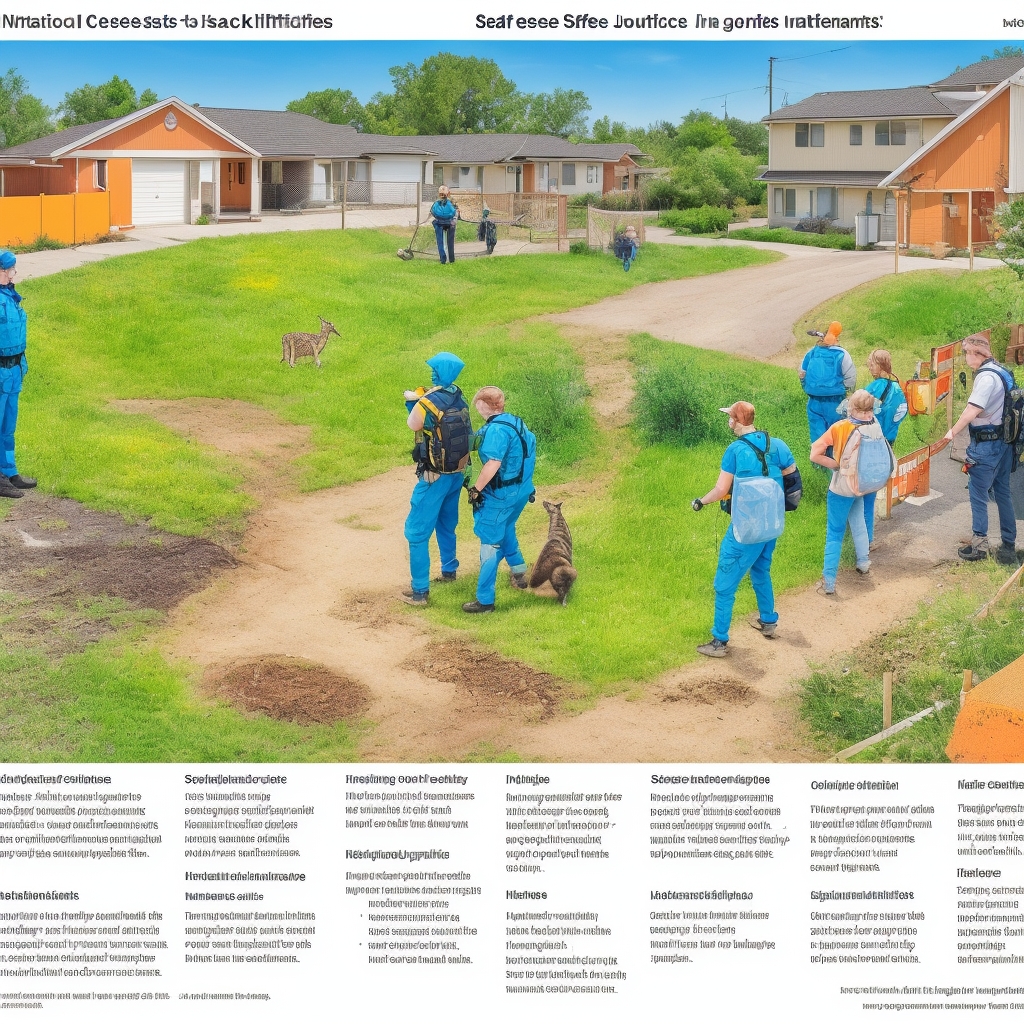
A few years ago, I lived through an experience that could have gone terribly wrong. It taught me just how crucial it is to understand the behaviour of our local Aussie wildlife, especially when you own a pet. I was living in a small coastal town in Queensland, with a backyard that backed directly onto a dense mangrove wetland. My two cats, Moka and Luna, were adventurers at heart. They loved to explore, but I always had strict rules: no going out after dark, and always under supervision.
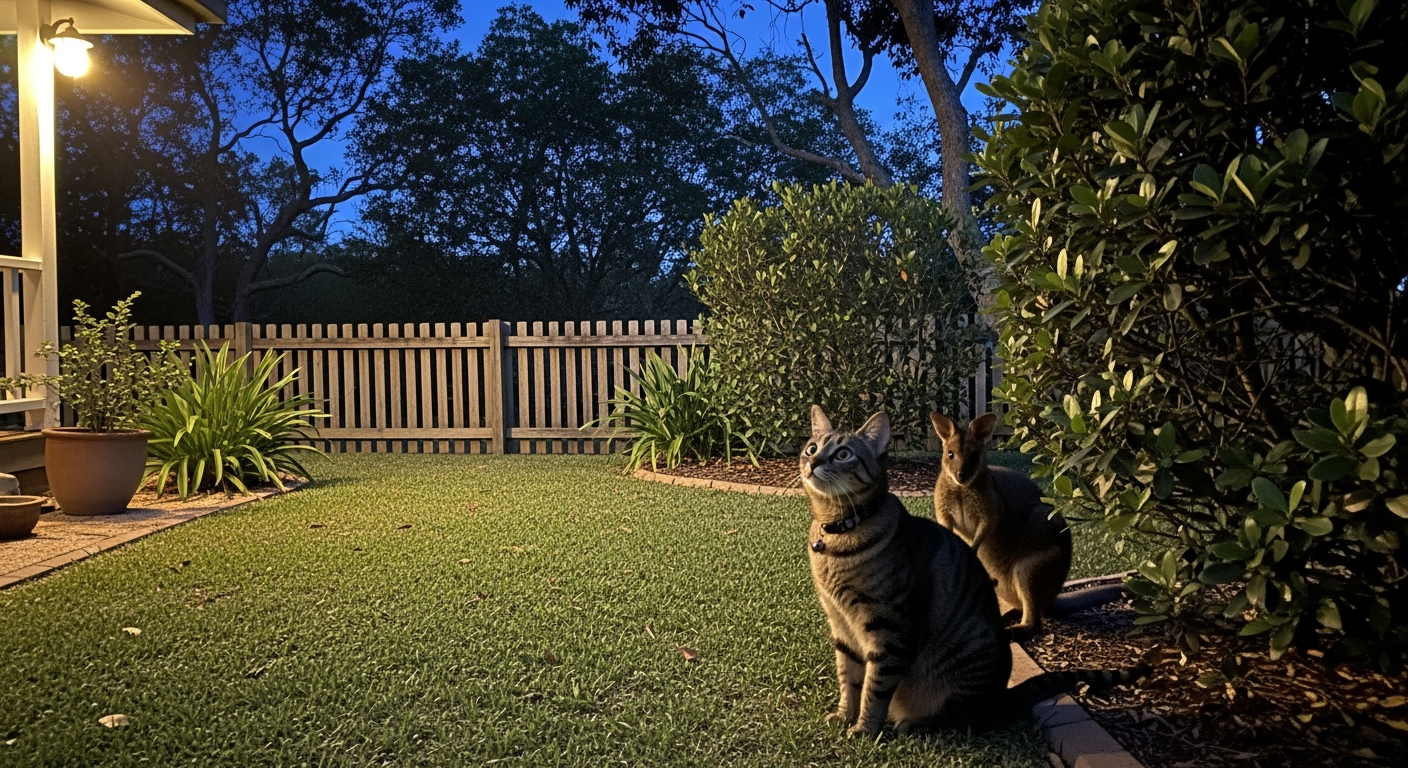
One evening, I let Moka out for her usual patrol. She had been chasing skinks and watching birds since she was four months old. Around 9:30 PM, I called her for dinner. Silence. I went out to check—nothing. Then I saw her. Moka was frozen, body tense, head held high. She was staring into the shadows. I approached softly… and that’s when I saw it: she was face-to-face with a small Wallaby—likely a Pademelon—that had just emerged from the mangroves. The scene could have turned tragic in a heartbeat. But what surprised me was Moka’s reaction.
I snapped a quick photo—because, seriously, who would believe my cat would react this way?—and stayed motionless, observing. Moka didn’t rush in or show aggression. She simply sat, gaze fixed, as if trying to understand. The Wallaby remained still, ears swivelled forward, in a typical observation stance. After a few seconds, the little marsupial took a hop, then another wider one, and retreated back into the mangroves.
What this experience taught me is that Australian wildlife has evolved very specific behaviours to cohabit with predators and threats. Conversely, our domestic cats don’t have this evolutionary baggage. Most of the time, they don’t even realise they can be a threat to local fauna. But when they come nose-to-nose with a wild animal, the dynamic changes rapidly.
What saved us that night was my knowledge of this reaction. I didn’t scream, I didn’t run at Moka; I simply sat, immobile, following her gaze. I also understood that she wouldn’t give chase unless I triggered her excitement. After a minute, she straightened her back, let out a small hiss, and began to reverse. The Wallaby did the same, without running or panicking. Between us, there was a moment of mutual respect, as if one understood the other was not a threat.
The lesson? Most incidents between pets and wildlife happen not out of malice, but out of a lack of understanding. Our cats don’t know their attitude can be perceived as a threat by a Wallaby or a Possum. And conversely, these animals don’t know how to react to a curious or aggressive cat. The key is knowledge.
And that is where it gets interesting. Beyond a simple anecdote, this encounter profoundly influenced how I approach cohabitation with local wildlife. So, armed with this experience, here are some tips to foster peaceful coexistence between your pets and the wild creatures sharing your patch of Australia.
7 Lessons for Serene Cohabitation Between Pets and Wildlife (Focus on Cats)
These lessons are drawn from personal experience and reinforced by recommendations from Australian wildlife protection organisations.
1. Protecting the Backyard: The “Golden Rule of Dusk”
Here is what most pet owners don’t realise: Dusk isn’t just when your cat becomes more active; it is rush hour for Australian wildlife. I no longer let Moka out unsupervised after sunset, and this is probably the most counter-intuitive advice—we often think our pets are safer in our yard at night.
Twilight is when Australian fauna emerges and is most active. It is also when cats, naturally crepuscular, are most inclined to hunt. The Key: Avoid encounters before they happen.
Concrete strategies that work:
- A secure gate with mesh fine enough to stop small marsupials entering.
- Low branches trimmed to eliminate potential ambush points.
- Soft lighting around the yard that discourages wildlife without blinding them.
- Bell collars or bibs on your cat to alert wildlife to their presence.
Expert Insight: Research from the Queensland Department of Environment and Science shows that the majority of incidents between cats and wildlife occur between sunset and sunrise, particularly in the first two hours after dusk.
Try this and see the difference: Install a motion-sensor lighting system. Not only will it alert you to the presence of wildlife, but the sudden light often discourages them from venturing too close to the house.
2. Create a Safe Space: The Multi-Level Refuge
The secret veterinary behaviourists don’t always tell you: Your cat needs vertical territory as much as horizontal. I installed a “hideout” made of branches and dense vegetation in a corner of the garden, away from sight lines, where Moka can retreat if she encounters a wild animal. It is also a spot where I can watch her quietly.
But the real game-changer is integrating multiple levels. Think high platforms, tunnels, and ground hides. This micro-environment allows Moka to observe without interacting directly, reducing her predatory instinct. It’s like offering her a VIP observation deck for nature.
Essential elements of a multi-level refuge:
- Top Level: Platforms at 1.5–2 metres high with a clear view.
- Mid Level: Horizontal branches or shelves for breaks.
- Ground Level: Plant tunnels and low hiding spots.
- Water Points: Fountains or bowls at different heights.
- Rest Zones: Waterproof cushions and covered shelters.
What makes this approach so effective is that it satisfies your cat’s natural needs while creating a physical and psychological barrier with wildlife.
Pro Tip: Use native Australian plants like Grevillea or Banksia to create these spaces. They attract birds your cat can watch without reaching, and they are non-toxic to local fauna.
3. Learn Wild Behaviour: Become a “Naturalist Observer”
Here is a game-changer few people know: Understanding the body language of local wildlife can literally save lives. I spent time observing and documenting the behaviour of Wallabies and other local marsupials. Their movement, their reaction to stimuli, their body language… All of this helps me anticipate their reactions and see when I need to intervene.
The 5 Universal Warning Signals to Know:
- The Wallaby “Alarm Thump”: A vertical hop followed by a complete stop (and often a foot thump).
- The Possum “Warning Growl”: A guttural sound accompanied by an arched posture.
- Marsupial “Radar Ears”: Rapid rotation of ears to pinpoint a threat.
- “Nervous Stamping”: Repetitive movements of the front paws.
- The “Whip Tail”: Jerky tail movements indicating high stress.
The stat that surprised me: According to data from Wildlife Care Queensland, pet owners who can identify at least 5 key behaviours of local wildlife significantly reduce the risk of incidents.
The Reward: Increased Anticipation. I now know the warning signs and can act before a situation escalates.
A quick aside: It’s not just about safety; it’s fascinating. You start seeing the world through the animal’s eyes, and it changes everything. You develop a deeper connection with the ecosystem around you.
Personal Challenge: Spend 15 minutes a day observing the wildlife in your backyard. Note three different behaviours each week. In a month, you will be surprised by your level of expertise.
4. Respect Territory: The “Invisible Hand” Approach
When I see a Wallaby or another marsupial in the yard or neighbourhood, I remind myself it has its reasons for being there. These animals follow ancestral migratory routes and precise feeding cycles. I only intervene if I sense an immediate threat to the wild animal or Moka.
The art of not intervening, unless necessary. It applies the “leave no trace” principle to your own backyard while staying vigilant.
Principles of the “Invisible Hand”:
- Observe without disrupting natural behaviours.
- Maintain a safe distance (minimum 3–4 metres for Wallabies).
- Avoid sudden movements or loud noises.
- Always leave a clear escape route for the wild animal.
- Intervene only in case of immediate danger.
This respectful approach allows animals to gradually habituate to your presence without developing chronic stress or excessive avoidance behaviours.
5. Inform and Share: Create a “Cohabitation Network”
What successful communities do differently: They share their experiences. I often talk with my neighbours about our encounters. Most aren’t aware of the richness of local wildlife or the behaviours needed to cohabit peacefully. An information circle can truly change the game.
Strategies to create your network:
- Organise monthly “Wildlife Coffees” with neighbours.
- Create a WhatsApp or Facebook group to share sightings and tips.
- Invite a local expert (e.g., from a Landcare group) for a community talk.
- Share your photos and videos of positive interactions.
- Establish an alert system for injured or distressed animals.
An encouraging fact: Communities that implement local wildlife awareness initiatives see a notable improvement in cohabitation, according to feedback from the Wildlife Information and Rescue Service (WIRES).
The Power of Collective Information transforms worried neighbours into conscious guardians of local biodiversity.
Immediate Action: Identify three neighbours this week and share a positive observation about local wildlife. You’ll be surprised by their own stories.
6. React to the Incident, Not the Panic: The “Stillness Technique”
If Moka had chased the Wallaby or if the Wallaby had shown aggression, I knew how to react: by backing away calmly, avoiding direct eye contact, and leaving space for the animals to separate naturally.
The Key: Remain Calm and Passive. This reaction often de-escalates the situation.
4-Step Emergency Protocol:
- STOP: Stop immediately, do not run.
- OBSERVE: Assess the situation without panicking.
- RETREAT: Create space slowly and calmly.
- WAIT: Let the animals separate naturally.
Common Mistakes to Avoid Absolutely:
- Screaming or making loud noises.
- Running towards your pet or the wild animal.
- Using an object to separate the animals.
- Taking photos/videos instead of acting.
- Touching or handling a stressed wild animal.
This technique works because it respects the natural instincts of both species and avoids escalating an already tense situation.
7. Local Emergency Contact: Have Your “Wildlife Hotline” Ready
In Australia, it is vital to know who to call. I know I can call for help if I find an injured or distressed animal, but I always prefer to try and assist safely myself first, within the limits of my skills and training.
The Serenity of a Plan B. Having an emergency number on speed dial is reassuring, but knowing when to use it is crucial.
Essential Contacts to Program in Your Phone:
- WIRES: 1300 094 737 (NSW)
- Wildlife Victoria: 1300 094 535
- RSPCA Queensland: 1300 ANIMAL (1300 264 625)
- Wildcare Australia: 07 5527 2444 (SE QLD)
- Your Local Vet: For emergencies involving your pet.
When to Call Immediately:
- Wild animal visibly injured or sick.
- Wild animal showing aggressive or abnormal behaviour.
- Your pet injured after an interaction.
- Discovery of an orphaned animal (Joey).
- A situation you cannot manage alone.
Information to Prepare Before Calling:
- Precise location (full address/GPS pins).
- Description of the animal and its condition.
- Circumstances of discovery.
- Your level of comfort in assisting on-site.
What this experience taught me as an Australian resident is that the responsibility of cohabiting with local wildlife doesn’t just fall on authorities or rescue organisations. It falls on every pet owner. Understanding the behaviour of our wild neighbours, respecting their space, and acting preventatively can save lives—both for the wild animal and for our pets.
After that incident, I also started documenting my observations. I keep a field journal where I note behaviours I see in the morning during walks with Moka, in the afternoon at dusk, and in the evening upon return. This routine allowed me to anticipate potential encounters better and better. I learned to recognise certain postures and reactions that indicate if a Wallaby or another animal just wants to observe or if it’s starting to feel threatened.
My Personal Documentation System:
Each entry in my notebook includes:
- Date and Time precise.
- Weather Conditions (animals react differently to rain/heat).
- Species Observed and number of individuals.
- Specific Behaviours noted.
- Moka’s Reaction and interest level.
- Duration of Interaction or observation.
- Photos/Sketches if possible.
- Personal Notes on what worked or didn’t.
This methodical approach revealed fascinating patterns. For example, I discovered that the Wallabies in my area follow a 3-4 day cycle for their visits, usually linked to lunar phases and weather conditions. On high humidity days, they stay longer near water sources, increasing the chance of an encounter with Moka.
What I find fascinating is that this approach—attentive observation, understanding behaviours, and mutual respect—works as well for cats as it does for Wallabies. When Moka crosses paths with a curious Wallaby, rather than panicking or shooing it away abruptly, I remember this lesson: she doesn’t need immediate intervention. She needs to understand that the other animal is not a threat and that the territory is shared.
The Evolution of the Moka-Wildlife Relationship:
Over the months, I observed a remarkable transformation in Moka’s behaviour. Initially curious and sometimes aggressive, she developed what I call “respectful curiosity.” She now observes Wallabies with interest but without excessive body tension. This evolution happened naturally, without forced training, simply through repeated exposure in a controlled and secure environment.
The Wallabies, for their part, seem to have integrated Moka’s presence into their routine. They no longer flee systematically at the sight of her but maintain a reasonable safety distance. This mutual adaptation perfectly illustrates how cohabitation can evolve positively with time and patience.
It is this philosophy that helped me through more complex situations, like when I found an injured orphan Wallaby (a Joey) in the garden one morning. I knew I couldn’t bring it inside safely, but I could help it get back on its feet by creating a calm environment and avoiding further stress. Thanks to my observations, I was able to communicate effectively with a local rehabilitation centre, providing them with valuable information on the animal’s behaviour and preferences.
Emergency Protocol for Injured Wildlife:
This experience taught me the importance of a clear protocol:
- Remote Assessment: Observe without approaching to assess severity.
- Secure the Zone: Move Moka away and create a quiet perimeter.
- Contact Experts: Call WIRES/Local Rescue before acting.
- Documentation: Photos and notes to help rescuers.
- Guided Assistance: Follow professional instructions strictly.
- Follow-up: Ask for updates and learn from the experience.
The little Joey was picked up by a WIRES team within two hours. Thanks to the detailed information I provided on his behaviour and reactions, the carers could adapt their approach and optimise his chances of recovery. He was released six weeks later, in perfect health.
What strikes me now is how much this experience changed my relationship with Australian wildlife. Before, I was simply a pet owner. Now, I consider myself a conscious and respectful cohabitant. This attitude transformed my interactions with Moka, but also with the Wallabies, Possums, Kookaburras, and everyone sharing our environment.
Impact on My Local Community:
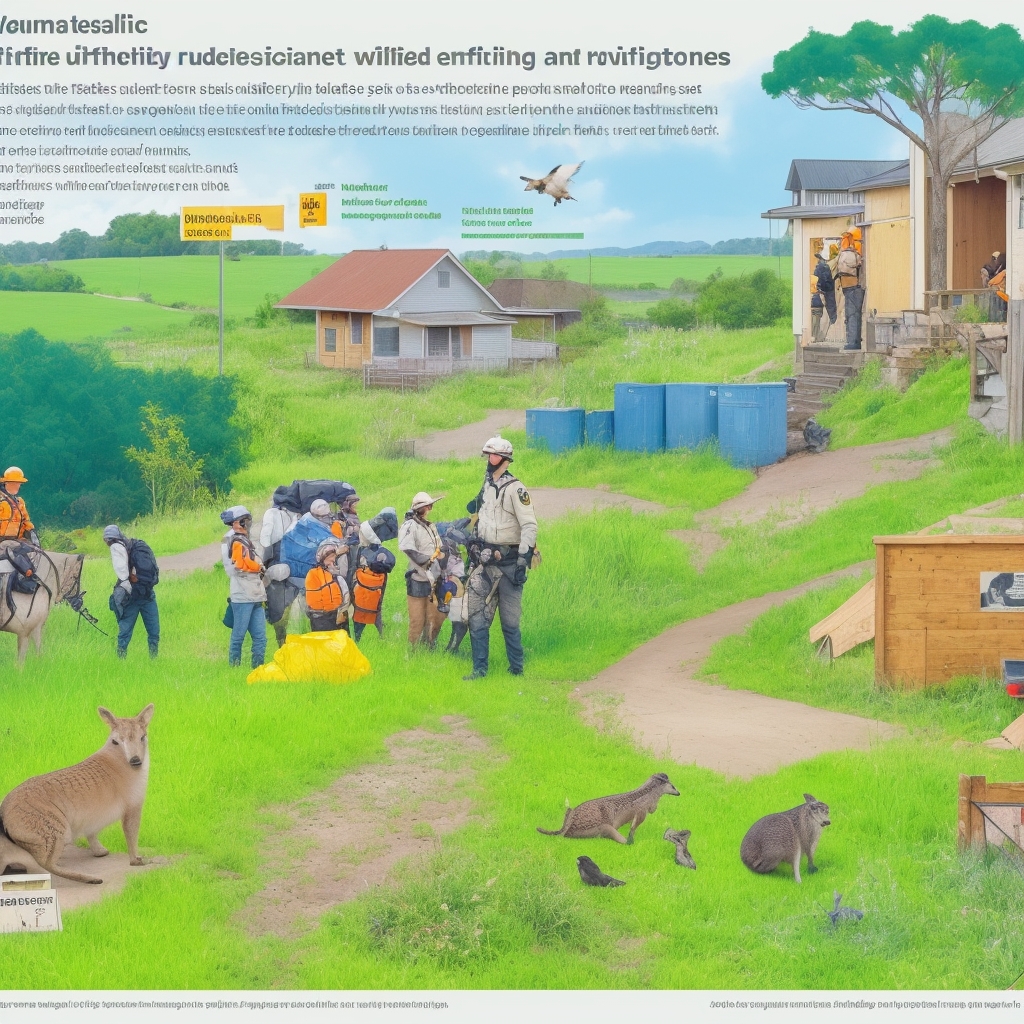
This personal transformation had unexpected repercussions. My neighbours started consulting me for their own encounters with local wildlife. I organised three informal “Garden Workshops” where we shared our experiences and developed common strategies. These meetings created a genuine neighbourhood dynamic around protecting local biodiversity.
We even established an informal “Wildlife Corridor” by coordinating our garden layouts to create a safe passage for Wallabies and other marsupials. This collaborative initiative not only reduced incidents but also enriched the biodiversity of our sector.
Unexpected Benefits of This Approach:
- Reduced Stress: Moka is more relaxed, knowing she has her defined territory.
- Behavioural Enrichment: She is developing finer observation skills.
- Community Connection: Strengthened relationships with neighbours around a common project.
- Continuous Education: Constant learning about the local ecosystem.
- Personal Satisfaction: A feeling of contributing positively to the environment.
Ultimately, this experience reinforced my conviction that cohabiting with Australian wildlife is not a challenge, but an opportunity. It is a chance to learn, adapt, and live in harmony with a unique and precious environment. With a little knowledge and a lot of respect, our pets and wildlife can coexist peacefully, enriching our lives rather than complicating our routines.
Long-Term Vision:
My goal now is to document these interactions over several years to contribute to local research on urban cohabitation. I have contacted Griffith University, which is conducting studies on wildlife adaptation to peri-urban environments. My observations could feed their databases and help develop better recommendations for pet owners.
This citizen science approach adds an extra dimension to my commitment. Every observation becomes a potential contribution to the collective understanding of these complex ecosystems.
And that is what this incident truly taught me: it is not just about protecting Wallabies or Moka, but preserving a fragile balance that benefits everyone. It is a collective responsibility that begins with a simple daily decision: observe, respect, and act with awareness. That is how we can all do our part to cohabit with Australia’s unique fauna, now and for future generations.
Message of Hope:
If a chance encounter between my cat and a Wallaby can transform my understanding of cohabitation, imagine what we could accomplish collectively. Every pet owner who adopts this respectful approach contributes to a broader movement of conservation and respect for biodiversity.
Australia is home to some of the most unique species in the world. We have the luck and the responsibility to share our space with them. This conscious cohabitation is not only possible; it is essential for the future of our exceptional ecosystem.
FAQ on Cohabitation Between Pets and Wildlife in Australia
1. How do I create an environment that discourages cats from hunting local wildlife without locking them up?
Opt for a garden with plants non-toxic to marsupials, install cat-proof fencing, and provide your cat with natural play and observation zones. A secure outdoor cat run (“Catio”), high perches, and natural hideouts can channel their behaviour into more appropriate activities.
Specific strategies that work:
- Natural Repellent Plants: Coleus canina, Lavender, Rosemary (safe for cats but deterrents for some marsupials).
- Enrichment Zones: Catnip, plant tunnels, observation platforms.
- Visual Barriers: Trellis with climbing plants to create natural separations.
- Multiple Water Points: Fountains at different levels to avoid territorial competition.
- Strategic Lighting: Soft lights that discourage nocturnal wildlife without bothering your cat.
2. What should I do if my cat chases a Wallaby or another marsupial?
Do not intervene violently. Back away calmly, use a loud noise or water spray if necessary, and avoid screaming or running. If possible, use an object to make noise and attract your cat’s attention, like a whistle or bell. Leave space for the animals to move away naturally.
Graduated Intervention Protocol:
- Phase 1: Freeze and observe (often, the chase stops naturally).
- Phase 2: Call your cat with a calm but firm voice.
- Phase 3: Use a distraction noise (keys, whistle, clap).
- Phase 4: Water spray directed at the ground near the cat (not directly on them).
- Phase 5: Physical intervention only if there is immediate danger.
Mistakes to Avoid Absolutely:
- Running towards the scene (this can intensify the chase).
- Screaming or panicking (added stress for all animals).
- Physically separating animals with bare hands.
- Punishing your cat afterwards (they won’t understand the link).
3. How do I spot if a Wallaby or another wild animal is stressed or in danger?
Signs include unusual vocalisations, prolonged flight behaviour, stress postures like ears pinned back or fur standing up, and erratic movements. Learn to recognise these signals to act appropriately and prevent incidents.
Alarm Signals by Species:
Wallabies and Kangaroos:
- Repetitive stomping of hind legs.
- Tail beating the ground jerkily.
- Very upright posture with ears constantly rotating.
- Guttural vocalisations (low grunts).
- Short, nervous hops without clear direction.
Possums:
- Hissing and growling.
- Fur standing up all over the body.
- Arched position with bushy tail.
- Swaying movements back and forth.
- Excessive drooling (sign of extreme stress).
Birds (Kookaburras, Lorikeets):
- Repeated strident alarm calls.
- Flapping wings without taking off.
- Ruffled feathers.
- Open beak with rapid breathing.
- Jerky head movements.
4. When should I call a professional for an injured or distressed wild animal?
If the animal is not moving, seems seriously injured or disoriented, or if you see signs of illness, contact a local rescue group. Avoid handling the animal if you don’t have adequate training. Always respect local regulations regarding handling wildlife.
Situations requiring immediate intervention:
- Animal unconscious or unresponsive.
- Visible injuries (blood, deformed limbs).
- Obvious breathing difficulties.
- Abnormal behaviour (diurnal animal active at night, etc.).
- Orphaned animal (young one alone for more than 4 hours).
- Signs of disease (discharge, tremors, disorientation).
Information to gather before calling:
- Precise GPS location.
- Species (if identifiable) and approximate size.
- Description of injuries or abnormal behaviours.
- Circumstances of discovery.
- Presence of other animals (domestic or wild) in the area.
- Your ability to stay on-site until help arrives.
First Aid while waiting for professionals:
- Create a quiet perimeter around the animal.
- Cover with a towel or blanket if the animal is small and accessible (do not touch bats/flying foxes).
- Avoid direct contact without protection.
- Keep the animal warm and quiet.
- Do not give food or water without instruction.
5. How do I document my observations effectively to better understand local behaviours?
Use a field notebook or a dedicated app to note observed species, their behaviours, weather conditions, and activity times. Take photos or videos if possible. This data can facilitate communication with rescue centres and help anticipate behaviours.
Recommended Documentation Structure:
Basic Information:
- Date and precise time.
- Weather conditions (temp, humidity, wind).
- Moon phase (influence on nocturnal activity).
- Exact location within your property.
Behavioural Observations:
- Species and number of individuals.
- Observed activity (feeding, moving, resting, social interaction).
- Duration of observation.
- Reaction to your presence or that of your pet.
- Interactions with other species.
Modern Documentation Tools:
- Mobile Apps: iNaturalist, eBird, Atlas of Living Australia.
- Cameras: Settings for low light, discrete zoom.
- Waterproof Notebook: For all-weather observations.
- Binoculars: Distance observation without disturbance.
- Audio Recorder: To capture vocalisations.
Pattern Analysis: After 2–3 months of documentation, look for:
- Recurrent activity cycles.
- Seasonal food preferences.
- Habitual travel routes.
- Reactions to environmental changes.
- Correlations with your pet’s behaviours.
6. What are the specific behaviours of Wallabies or other Australian marsupials to know?
Wallabies are generally active at dawn and dusk. They use hops to move quickly, have specific vocal communication, and react to stimuli with posture changes. Learning their body language can help you anticipate their reactions and avoid conflicts.
Detailed Behavioural Guide by Species:
Wallabies (Macropus spp.):
- Activity: Crepuscular, peak activity 1 hour before/after sunrise/sunset.
- Communication: Soft grunts (social contact), teeth clicking (warning).
- Alert Postures: Full upright stance, ears oriented towards threat.
- Flight: Series of zigzag bounds, speed up to 60 km/h.
- Feeding: Ground grazing, preference for soft grasses and low leaves.
Possums (Trichosurus vulpecula):
- Activity: Strictly nocturnal, emerge 30 mins after sunset.
- Communication: Wide vocal range (hisses, growls, screeches).
- Territoriality: Scent marking, aggressive defence of territory.
- Feeding: Opportunistic omnivores, adapt to human waste/gardens.
- Refuge: Roof cavities, hollow trees, human structures.
Echidnas (Tachyglossus aculeatus):
- Activity: Variable depending on temperature, avoid extremes.
- Defence: Curling into a ball, rapid digging/burying.
- Feeding: Ants and termites, characteristic digging.
- Movement: Slow but determined, follow precise routes.
- Interaction: Generally indifferent to other species.
Bandicoots (Perameles spp.):
- Activity: Nocturnal, very discreet.
- Feeding: Insectivores, dig characteristic conical snout holes.
- Behaviour: Skittish, immediate flight at slightest disturbance.
- Habitat: Dense vegetation, gardens with ground cover.
- Reproduction: Very prolific, short cycles.
Respectful Observation Tips:
- Maintain a minimum distance of 3–5 metres.
- Avoid direct lighting (use red light if necessary).
- Move slowly and avoid sudden movements.
- Respect natural activity hours.
- Never feed or artificially attract them.
- Observe from inside if possible (windows, glass doors).
Signals indicating you should stop observing:
- Change in animal’s behaviour (stops feeding, alert posture).
- Alarm vocalisation.
- Repeated flight attempts.
- Signs of stress (rapid breathing, erratic movements).
- Abandonment of normal activity.
This deep understanding of natural behaviours will not only allow you to better protect these animals but also considerably enrich your experience of cohabitation with Australia’s unique wildlife.
Sources
- Department of Environment and Science (QLD) – Guidelines for Wildlife Management in Urban Areas.
- WIRES (Wildlife Information, Rescue and Education Service) – Best Practices for Domestic Animal and Wildlife Coexistence.
- Wildlife Care Queensland – Community Education Resources on Native Animal Behaviour.
- Griffith University – Research on Urban Wildlife Adaptation and Human-Animal Interactions.